How do you start forex trading as a beginner and what actually matters first?
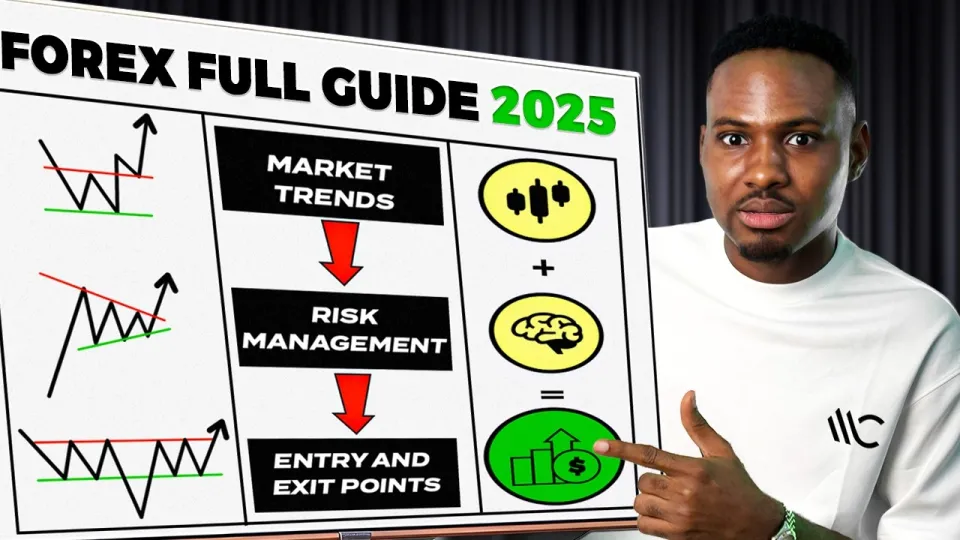
Video: How To Start Forex Trading For Beginners’ 2025 (Full Course)
You can order the same kind of articles for your own video to boost it on YouTube and Google. Just message the Telegram bot @sat_sit_bot. It writes articles around your video, embeds the video and publishes them on popular niche websites (no ads). Try it free: 50 articles on us.
· based on the channel Jeffrey Benson Forex
Forex trading for beginners starts with three decisions made in order: pick a regulated broker and open a demo account, learn how currency pairs and market sessions work, and only then place a first trade with strict risk limits. The full beginner course from Jeffrey Benson Forex walks through exactly that sequence, and students who want the structured version can start with the Fire Pips FX training plans before risking real capital.
What forex actually is and why currencies are always traded in pairs
Forex is the global market for exchanging one currency for another, and every quote you see is a ratio between two currencies. When you buy EUR/USD, you are buying euros and simultaneously selling US dollars; the price tells you how many dollars one euro costs. There is no central exchange — trading happens over the counter between banks, brokers and retail participants, which is why the market runs 24 hours a day from Sunday evening to Friday evening (UTC) and why brokers, not a single exchange, set the spreads you pay.
Three terms carry most of the beginner workload:
- Pip — the standard unit of price movement, usually the fourth decimal place for most pairs and the second for JPY pairs.
- Lot — the position size; one standard lot is 100,000 units of the base currency, and mini (10,000) and micro (1,000) lots exist precisely so beginners can trade small.
- Spread — the difference between bid and ask, i.e. the built-in cost of every trade, which widens when liquidity thins.
Majors such as EUR/USD, GBP/USD, USD/JPY and AUD/USD carry the tightest spreads and the deepest liquidity, which is why they are the sensible starting universe. Exotic pairs look attractive because they move a lot, but their spreads and gaps punish small accounts.
How the trading day is structured across the four sessions
The forex day is a relay of four sessions, and where your session sits determines how much movement you can realistically expect. Sydney opens the week, Tokyo follows, London takes over in the European morning, and New York closes the cycle. The London–New York overlap is the busiest window of the day: both major financial centres are active, volatility spikes, and spreads are at their tightest. The late New York and Sydney stretch is the quietest and the worst place for a beginner to expect a clean breakout.
A practical implication: pick one or two sessions that fit your actual schedule and study only those. A trader who can watch the London open every morning will learn faster than one who randomly checks charts at midnight. Session awareness also explains a common beginner complaint — a strategy that worked all week suddenly fails because it was being tested during thin liquidity.
The tools a beginner needs before the first trade
A working forex setup is smaller than most course sales pages suggest, and every item on the list has a job. The essentials:
- A regulated broker account. Regulation matters more than spreads; check which authority supervises the entity you sign with and whether client funds are segregated.
- MetaTrader 5 (MT5). The standard platform for charting, order placement and position management; the course links a broker registration page and a separate guide for connecting the broker to MT5.
- A demo account. Weeks of execution practice with zero financial risk, used to build the mechanical habit of entries, stops and targets.
- An economic calendar. Rate decisions from the Fed, ECB, BoE and BoJ, plus CPI and non-farm payrolls, are the scheduled events that reprice currencies in seconds.
- A trading journal. Screenshot every trade with the reason, the risk and the outcome; patterns in your own behaviour show up faster than in any indicator.
One habit worth copying from the comment thread under the course: keep a notebook open while studying. Writing down the session times, the pip values and the entry rules by hand forces recall in a way that passive watching never does.
Building a basic strategy foundation that survives real prices
A beginner strategy is a written set of conditions for entry, exit and position size — nothing more elaborate than that is needed at the start. The most defensible structure combines three layers: a directional bias from higher timeframes (daily and 4-hour), a specific trigger on a lower timeframe (1-hour or 15-minute), and a predefined invalidation point where the idea is simply wrong. Support and resistance, trendlines and moving averages are enough to define those layers; stacking five indicators on one chart usually produces conflicting signals and hesitation.
Rules that make a strategy testable:
- Define the setup in one sentence so a stranger could execute it.
- Fix the stop-loss by structure, not by comfort — place it where the idea breaks, then size the position to that distance.
- Set a minimum reward-to-risk ratio, commonly 1:2, so a sub-50% win rate can still be profitable.
- Record 30–50 demo trades before judging whether the edge exists.
How to place a first trade without blowing up the account
Placing a first trade is a mechanical exercise once the setup is defined, and the order ticket matters as much as the idea. On MT5 the sequence is: select the pair, choose market or pending order, set the volume in lots, attach a stop-loss and take-profit in price terms, and confirm. Before clicking buy or sell, calculate the monetary risk — position size multiplied by stop distance — and check it against the account. A widely used ceiling is 1–2% of equity per trade, which keeps a string of ten losses survivable rather than terminal. Leverage is not a target; it is a borrowing facility that amplifies both directions equally.
Common beginner mistakes and the questions they generate
Most beginner losses trace back to a short list of repeatable errors rather than bad luck. Overleveraging tops it: a 1:500 account invites position sizes that a 20-pip move wipes out. Next is trading without a stop-loss, or moving the stop further away to avoid being wrong. Overtrading follows — revenge entries after a loss, or forcing trades during dead sessions. Then there is strategy hopping: switching systems every week means no system ever gets a fair sample. Finally, treating signals as a substitute for understanding. Copying trades can be a learning aid, but a trader who cannot explain why a position exists cannot manage it when the market turns.
The questions that recur in the course comments are telling: people ask how long before results appear, whether a demo account is really necessary, how much capital is enough, and how risk management works in practice. The honest answers are unglamorous — months rather than weeks, demo until execution is boring, capital sized so that a normal losing streak does not change your life, and risk defined before entry every single time.
Useful links from the course
- Fire Pips FX training plans — the paid student programme.
- https://t.me/firepipsignals — one free daily signal.
- https://my.assexmarkets.com/auth/register?partner_code=1699134 — the broker registration page referenced in the course.
- https://t.me/jeffreybenzhelpbot — entry point to the premium signal group.
The bottom line on starting forex
Forex rewards preparation before prediction: a regulated broker, MT5, a demo phase, a written strategy and a hard risk ceiling do more for a beginner than any indicator. The full course from the Jeffrey Benson Forex channel is a useful spine for that process because it moves in the same order — what the market is, how sessions work, which tools to install, how a setup is built, how a trade is placed, and which mistakes to avoid. Treat the signal channels as a supplement to your own journal, not a replacement for it. Start with the training plans if you want structure, and keep the first live position small enough that being wrong teaches you something instead of removing you from the game.
Key takeaways
- Forex is a decentralised over-the-counter market where currencies are traded in pairs, open around the clock five days a week.
- Four sessions — Sydney, Tokyo, London and New York — overlap and create the liquidity and volatility beginners should trade around.
- The minimum practical toolkit is a regulated broker account, MetaTrader 5, a demo account, an economic calendar and a trading journal.
- Risk management comes before strategy: a common beginner ceiling is 1–2% of account equity risked per trade.
- A first live trade should follow weeks of demo execution, not replace it.
Source: How To Start Forex Trading For Beginners’ 2025 (Full Course) · Markdown version
Questions & answers
How much money do I need to start forex trading?
There is no universal minimum, but the account must be large enough that a normal losing streak does not force you to stop. With 1–2% risk per trade, a $500 account risks $5–10 per position, which is workable on micro lots but leaves little room for error. Many beginners spend several weeks on demo first and fund a live account only once their execution is consistent.
How long does it take to become profitable?
Realistically months, not weeks. A beginner needs time to learn the platform, test a written strategy over 30–50 demo trades and build the discipline to keep risk fixed. Anyone promising consistent profits in days is selling a signal service, not an education.
Is a demo account really necessary, or can I go straight to live trading?
Demo is where the mechanics get learned for free — order types, stop placement, position sizing and platform navigation. Skipping it means paying tuition to the market instead. The usual compromise is to demo until execution feels routine, then go live with the smallest size the broker allows.
Can I just copy someone else's trades instead of learning?
Copying signals can work as a supplement, but it teaches nothing about why a position exists, so you cannot manage it when conditions change. A trader who understands the setup can adapt the stop or exit early; someone blindly following a channel cannot. Use signals alongside your own journal and demo practice.